Marvel’s Wolverine matters before the first full reviews, before the final combat breakdown and before players know exactly how much freedom the game will offer. It matters because Insomniac Games has already changed expectations for superhero games once. With Marvel’s Spider-Man, the studio proved that a licensed comic-book game could feel polished, emotional, technically confident and broadly accessible without losing the fantasy of the character. Wolverine gives Insomniac a harder, riskier and potentially more interesting test.
Spider-Man is movement, charm, responsibility and spectacle. Wolverine is damage, anger, survival and restraint breaking at the wrong moment. A great Wolverine game cannot simply copy the Spider-Man formula with claws. It needs a different pace, a different camera language, a different combat rhythm and a different emotional temperature. Logan does not swing above the city as a symbol of hope. He walks into violence carrying decades of trauma, memory gaps, military experiments, animal instinct and reluctant loyalty.
That is why this game feels important. It is not only another Marvel project. It is a chance to see whether Insomniac can build a second superhero identity that stands apart from its own greatest success. If Marvel’s Wolverine works, it can show that modern superhero games do not need to follow one safe template. They can be personal, brutal, focused and character-specific.
Why Wolverine is not Spider-Man with claws
The easiest mistake would be treating Wolverine as a standard power fantasy. He has adamantium claws, a healing factor, heightened senses and a reputation for tearing through enemies. That sounds perfect for an action game, but it is only half the character. Logan is compelling because power does not make him clean. His abilities come with pain, guilt and loss of control. His body survives what his mind cannot always easily carry.
That creates a different design problem from Spider-Man. Spider-Man’s fantasy is fluidity: swing, leap, dodge, joke, save, improvise. Wolverine’s fantasy is pressure: close distance, absorb punishment, strike hard, recover, keep moving. Spider-Man avoids being hit because that suits the character. Wolverine can be hit and still become more frightening.
A good Wolverine combat system should feel heavy without becoming slow. It should make claws feel dangerous, not decorative. Enemies should not behave like soft targets waiting for stylish combos. They should create situations where Logan’s aggression, healing and instincts all matter. The player should feel that every fight has weight, even when Wolverine is clearly the most dangerous person in the room.
This difference changes the whole game. Traversal cannot simply be a replacement for web-swinging. Exploration cannot depend on rooftops and skyline movement. The world cannot feel like a bright playground in the same way New York does for Spider-Man. Wolverine needs spaces that support stalking, ambushes, close combat and emotional unease.
The mature tone is the real promise
Insomniac has described Marvel’s Wolverine as a more mature superhero project, and that matters because Logan’s story weakens when it is softened too much. Wolverine can be funny, loyal and protective, but the character’s center is rough. His best stories often involve violence, identity, experimentation, memory, war, exploitation and the fear that he is useful mainly as a weapon.
A mature tone does not mean endless gore for its own sake. It means the game should understand consequence. When Wolverine fights, it should feel different from knocking out generic thugs in a bright comic-book brawl. When he heals, it should not erase the emotional cost of being harmed. When he loses control, the story should notice. The claws should not be treated only as cool accessories.
This is where Insomniac has an opportunity. The studio has already shown that it can build character-driven superhero drama around grief, responsibility and identity. Wolverine gives it darker material. The challenge is to avoid turning darkness into one-note grimness. Logan is not interesting because he is always angry. He is interesting because the anger sits beside tiredness, loyalty, regret, humor and rare tenderness.
A strong Wolverine story should include several emotional layers:
- the weaponized body and the person trying to reclaim it;
- the tension between animal instinct and moral choice;
- the loneliness of a character who survives almost everyone;
- the violence that protects others but also isolates him;
- the mystery of memory, manipulation and hidden history;
- the question of whether Logan can belong anywhere without being used.
These are not side details. They are the reason Wolverine has lasted. A game that only delivers slashing combat may be exciting for a few hours. A game that understands why Logan fights could become one of Marvel’s strongest interactive stories.
Combat has to sell the claws
Every superhero game has one central physical promise. Spider-Man must make web-swinging feel right. Batman must make predator stealth and counter-based combat feel controlled. Wolverine must make the claws feel real. If that fails, nothing else can fully compensate.
The claws should change how enemies behave. They should make close range dangerous. They should create a sense that Wolverine is not simply punching with metal lines attached to his hands. He is cutting through space, armor, fear and bodies. The animation, sound design, hit reactions and enemy durability all have to support that fantasy.
At the same time, Wolverine cannot be invincible in a way that removes tension. His healing factor gives designers a useful tool, but also a problem. If the player can absorb everything without consequence, combat becomes flat. If enemies damage him too easily, the character fantasy weakens. The balance should make him feel hard to kill but not careless. The player should survive through aggression, timing, positioning and recovery, not through button-mashing alone.
The best combat design would let Logan feel dangerous in stages. At first, he may be controlled, precise and predatory. As damage builds or anger rises, he may become more savage. If the game uses rage systems, finishers or healing mechanics, they need to feel tied to character rather than placed on top of him like ordinary action-game meters.
A useful comparison shows why Wolverine needs its own combat language.
| Superhero game element | Spider-Man approach | Wolverine approach |
|---|---|---|
| Movement fantasy | Speed, height, acrobatics and flow | Grounded pursuit, lunges and close pressure |
| Combat rhythm | Dodging, juggling, gadgets and crowd control | Heavy strikes, grabs, claws and regeneration |
| Enemy relationship | Outsmart and overwhelm groups | Intimidate, endure and tear through threats |
| Tone | Heroic, emotional, energetic | Brutal, tense, personal and darker |
| Character risk | Failure to save others | Loss of control and being used as a weapon |
This is why the game matters for Insomniac. The studio cannot rely only on what worked before. Wolverine demands a new center of gravity.
The world should be smaller if the story needs it
One of the biggest questions around Marvel’s Wolverine is structure. Fans naturally wonder whether it will be open world, semi-open, linear, mission-based or built around several locations. Wolverine does not automatically need a massive city map. In fact, a tighter structure may serve him better.
Spider-Man benefits from open-city design because movement through the city is the fantasy. Wolverine benefits from intensity. A smaller, denser, more directed game could allow Insomniac to build stronger encounters, more atmospheric locations and better pacing. Logan’s stories often move through bars, labs, forests, military facilities, hidden bases, snowy wilderness, back alleys and places where violence feels close and personal.
That does not mean the game should be narrow or limited. It means scale should follow character. A huge open world full of repeated markers could weaken Wolverine if it turns him into another checklist hero. A more focused action-adventure with rich locations, strong mission design and meaningful exploration may fit him better.
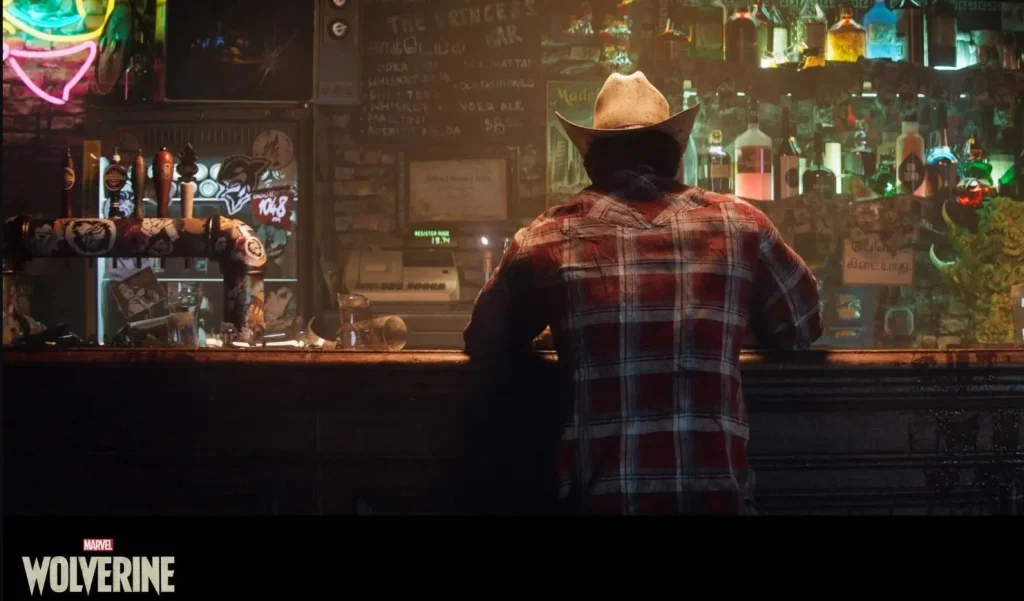
The most important spaces for Wolverine are not necessarily the biggest ones. They are places with texture: a bar before a fight, a lab with memories buried inside it, a cold road where someone is hunting him, a hideout full of people who fear what he can do, a facility connected to Weapon X. The world should feel dangerous and specific, not just large.
Insomniac’s Marvel universe gets bigger
Marvel’s Wolverine also matters because it expands Insomniac’s Marvel identity beyond Spider-Man. The studio is no longer only the team that made excellent Spider-Man games. It is becoming a major architect of PlayStation’s Marvel gaming world. That brings opportunity and pressure.
A shared continuity can be exciting if handled carefully. Fans enjoy hints, references and the feeling that heroes exist in the same wider world. But Wolverine must not feel like a side corridor in Spider-Man’s universe. He needs independence. His tone, locations and supporting cast should not be forced into constant crossover energy.
The best approach is probably confidence through separation. Let Wolverine stand on his own. Let the world feel connected only where it helps. A small reference can be more powerful than a heavy-handed cameo. If the story is about Logan, the game should trust Logan.
This matters for future superhero games as well. If Insomniac proves it can make Spider-Man and Wolverine feel genuinely different, it strengthens the argument for more character-specific Marvel projects. Not every hero needs the same map, same progression loop, same combat pacing or same tone. A good superhero game should be designed from the character outward.
Why fans are excited and cautious at the same time
The excitement is obvious. Wolverine has been waiting for a modern game with serious production values, a strong studio and the freedom to be intense. Insomniac has the trust of many players. PlayStation 5 hardware gives the game room for detailed animation, fast loading, expressive environments and brutal combat presentation. The character has mainstream recognition from comics, animation and film.
The caution is just as understandable. Expectations around superhero games are high after Insomniac’s Spider-Man success. Wolverine also carries different demands. Fans will notice if the violence feels weak, if the story avoids the darker parts of Logan, if the combat lacks weight or if the game feels too much like another template with a new skin.
There is also the issue of development visibility. Long-awaited games can collect rumors, leaks, speculation and imagined versions in the minds of fans. By the time the real game arrives, some players are no longer judging it against what was promised. They are judging it against what they built in their heads.
The strongest way through that pressure is clarity. Marvel’s Wolverine does not need to be everything. It needs to be a focused, confident Wolverine game. If it tries to satisfy every possible expectation, it may lose the sharpness that makes Logan work.
What would make it stand out
A strong Marvel’s Wolverine game should leave players feeling that they could not simply swap in another hero. The story, combat and pacing should all feel tied to Logan. That is the test.
Several things would make the game stand apart from other superhero releases:
- Combat that feels physical, violent and readable without becoming repetitive.
- A healing system that supports the character fantasy while preserving danger.
- Enemy design that forces different forms of aggression and control.
- Locations that feel personal to Logan’s history rather than generic Marvel spaces.
- A story that treats memory, anger and identity with weight.
- Mature tone without relying only on shock or gore.
- Pacing that chooses intensity over unnecessary open-world padding.
If Insomniac gets those pieces right, Marvel’s Wolverine could be more than a strong licensed game. It could become the clearest example of how superhero games can move beyond the open-world template and into character-shaped design.
The PlayStation 5 factor
Marvel’s Wolverine being built for PlayStation 5 gives it a cleaner technical target. Without a PlayStation 4 version, Insomniac can focus on modern hardware expectations: faster loading, richer environments, more detailed character models, advanced haptics, stronger animation blending and denser combat scenes. Technical ambition will not guarantee a better game, but it gives the studio room.
This matters because Wolverine’s fantasy depends on texture. The way claws enter combat, the way damage appears and heals, the way enemies react, the way Logan moves through a room — all of that depends on animation and feedback. A technically polished Wolverine game can make every strike feel more personal.
The PS5 also gives Insomniac a chance to create contrast. Quiet moments can be detailed and still. Violent moments can be fast and ugly. Snow, metal, blood, fire, shadows, claws and body movement can all carry mood. Wolverine is a character who benefits from close physical detail more than broad spectacle alone.
Why this game matters beyond Marvel fans
Marvel’s Wolverine matters even for players who are tired of superhero saturation because it tests whether the genre can keep changing. The biggest risk for superhero games is sameness: familiar progression trees, busy maps, collectible loops, scripted set pieces and stories that feel interchangeable. Wolverine can challenge that if Insomniac lets the character reshape the design.
A successful Wolverine game could encourage more focused superhero projects. It could show that a darker, tighter, more violent character piece has a place beside city-scale hero fantasies. It could also prove that mature comic-book games do not need to imitate film or chase endless live-service systems. They can be crafted single-player experiences built around one strong identity.
That is why the game carries unusual weight. It is not only about Logan finally getting a major modern showcase. It is about whether a top studio can adapt its superhero expertise instead of repeating it.
Conclusion
Marvel’s Wolverine matters because it asks Insomniac to do something harder than continue a successful formula. Spider-Man gave the studio speed, heart and open-city heroism. Wolverine demands brutality, restraint, trauma and close-range danger. The game has to feel more grounded, more violent and more psychologically tense while still being fun to play.
The opportunity is enormous. Logan is one of Marvel’s strongest characters because he is not clean. He is a survivor, a weapon, a protector, a loner and a man constantly fighting what others tried to make him. That gives Insomniac material far richer than simple claw-based action.