High-octane speeds, razor-sharp turns, and the iconic electronic beats of the late nineties defined the gold standard of anti-gravity racing. While mainstream publishers moved away from the sleek, futuristic aesthetics of the original PlayStation era, a passionate indie development scene stepped up to reclaim the throne. BallisticNG emerged not just as a love letter to Psygnosis’s classic WipEout series, but as an open playground for creative minds. By providing an incredibly robust suite of creation tools, the game has transformed into an active hub where nostalgist developers and casual players alike can rewrite the rules of anti-gravity motorsport.
The engine under the hood of community creativity
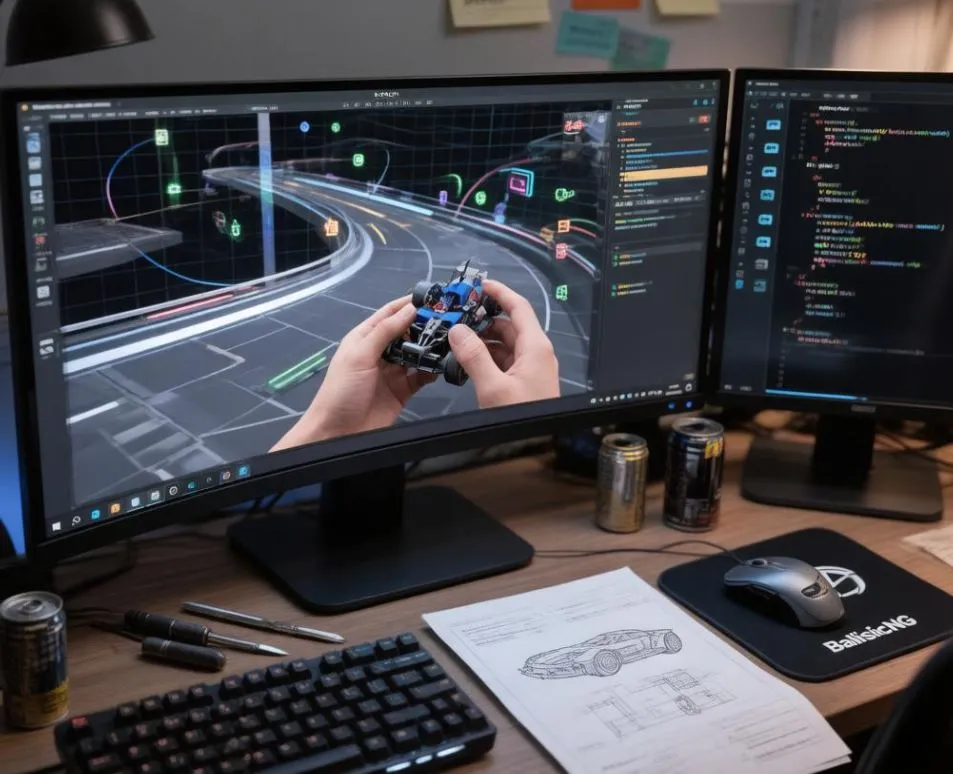
At the heart of the game’s longevity is a highly accessible dual-system design that accommodates both novice creators and veteran software engineers. Players do not need a degree in game development to start shaping their own high-speed environments, thanks to an intuitive user interface built directly into the game. However, for those looking to replicate the complex geometry and custom shaders of early 32-bit hardware, the developers have provided seamless integration with industry-standard external software.
To understand the breadth of what is possible within the ecosystem, it is helpful to explore the primary avenues through which creators can shape their customized racing experience:
- The internal track editor: an in-game tool allowing players to quickly snap together track tiles, define racing lines, and place weapon pads.
- The Unity developer kit: a specialized package that lets creators use the Unity engine to apply complex lighting, custom textures, and advanced particle effects.
- Custom audio importing: a feature that permits racers to override the default soundtrack with high-energy breakbeats and techno tracks.
- The scripting API: a C-based system enabling advanced coders to program unique game modes, custom weapon behaviors, and interactive track elements.
This layered approach ensures that the entry barrier remains low for beginners who want to build a quick circuit, while the ceiling remains virtually limitless for professional artists. Consequently, the workshop pages are constantly flooded with highly polished content that keeps the gameplay loop feeling fresh and unpredictable.
Rebuilding the golden era of WipEout
The most prominent manifestation of this creative freedom is the preservation of digital gaming history. Fans of the classic PlayStation 1 trilogy have taken it upon themselves to meticulously recreate every vehicle, track, and visual element from those original releases. Through the clever use of low-poly modeling and retro-styled textures, modders have successfully bridged the gap between 1995 and today.
To show how these efforts are split across different aspects of development, the following comparison highlights the specific tools and workflows required to port these legendary assets into the modern game engine:
| Customization type | Primary software used | Key technical challenge | Community focus |
|---|---|---|---|
| Retro tracks | Unity and Blender | matching the physics grids | replicating the steep drops of Altima VII |
| Custom ships | Unity SDK | setting up thruster points | importing classic AG-Systems and Feisar models |
| Visual shaders | custom Unity materials | simulating the PS1 vertex jitter | capturing the retro low-fidelity aesthetic |
| HUD overlays | C# scripting | aligning telemetry displays | recreating the iconic WipEout 3 user interface |
This division of labor allows different specialists within the community to collaborate on massive historical preservation projects. A 3D modeler can focus on shaping the iconic hulls of the classic ships, while a programmer ensures that the handling characteristics feel exactly like the heavy, drift-focused physics of the classic console era.
Crafting your own anti-gravity machine
For many players, the ultimate thrill lies in designing a unique vehicle that represents their own fictional racing team. The process of introducing a custom vehicle into the high-speed universe relies heavily on the official Unity integration package provided by the developers, which translates standard 3D models into functional, physics-compliant racing crafts.
To successfully build and deploy a functional racing vessel from scratch, creators must navigate a series of precise development phases:
- The modeling phase: constructing a low-polygon 3D model in software like Blender, keeping the polygon count low to match the retro aesthetic.
- The texturing phase: applying pixelated, uncompressed textures to mimic the charming limitations of late-nineties graphics hardware.
- The Unity configuration: importing the model into the official development kit to assign collision boxes and camera anchor points.
- The physics tuning: editing the configuration files to adjust the thrust, shield capacity, drag coefficients, and weapon handling of the craft.
- The workshop publishing: uploading the completed asset to the Steam Workshop for the entire community to download and test.
By mastering this production pipeline, players can introduce almost any design imaginable into the game, from experimental military vessels to whimsical floating objects. This level of customization ensures that no two lobbies look alike, fostering a sense of ownership and personal expression that is rarely seen in modern commercial racing titles.
The future of low-poly racing
The flourishing landscape of ballisticng modding serves as a powerful testament to the value of open development. By giving players direct access to the tools used to build the game, the developers have secured an endless stream of high-quality content that rivals official expansion packs. Recreating the past is only the beginning; as the tools continue to evolve, the community is pushing the boundaries of what anti-gravity racing can be. Whether you are looking to pilot nostalgic custom ships ballisticng creators have lovingly ported from the PS1 era, or test your reflexes on gravity-defying tracks of your own design, this vibrant platform proves that the soul of the nineties is not only alive but moving faster than ever before.