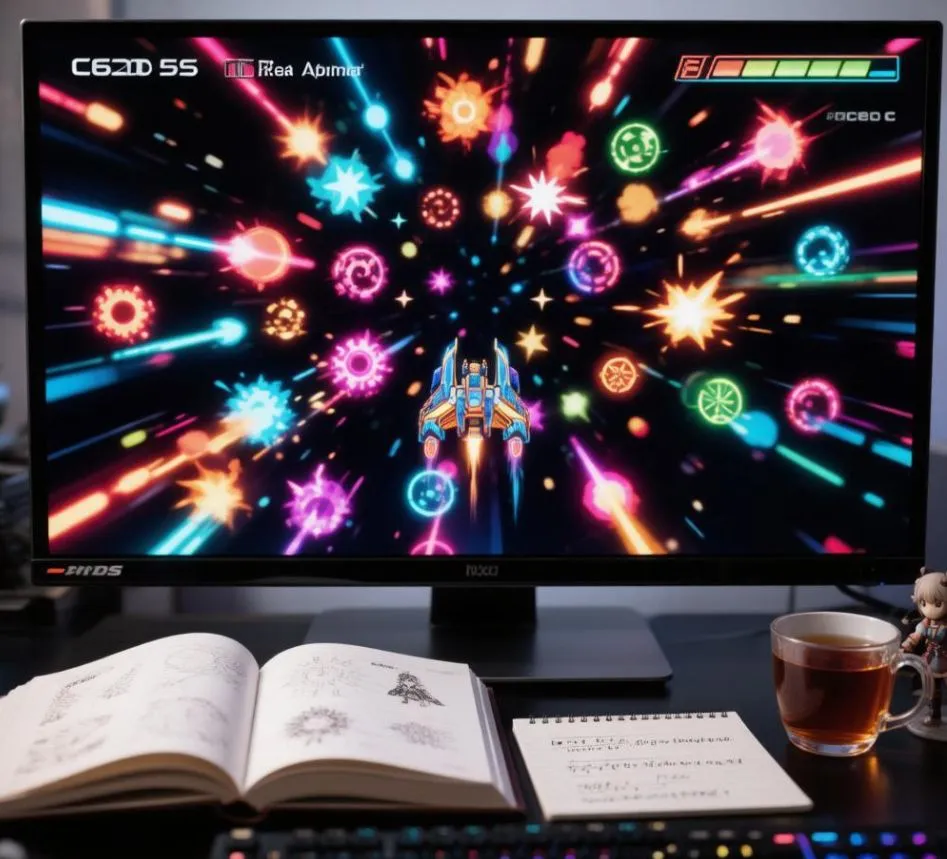
For years, the manic shooter genre was considered an impenetrable fortress of digital masochism, reserved exclusively for players with superhuman reflexes. Legendary Japanese developers defined this era, crafting experiences where screens were choked with intricate patterns of glowing neon projectiles. However, the release of crimzon clover world ignition shattered the illusion that this niche genre had to remain hostile to newcomers. By implementing incredibly refined bullet hell shmup mechanics, this indie masterpiece honors the glorious legacy of its arcade ancestors while paving a smooth, welcoming pathway for the uninitiated.
The legacy of Cave and the modern evolution of arcade action
Historically, manic shooters relied on absolute precision, forcing players to navigate a tiny single-pixel hitbox through a moving maze of death. While keeping this thrilling core intact, contemporary developers have realized that visual feedback and rewarding power-up cycles are essential for keeping players engaged. The genius of the design lies in how it translates this overwhelming visual chaos into an addictive loop of risk and reward.
To achieve this fine balance between old-school intensity and contemporary polish, the game introduces several key systems that redefine how players interact with danger:
- The double break system: a mechanical state that allows players to multiply their firepower and score potential by filling a gauge twice.
- The lock-on attack: a homing laser system that targets multiple enemies simultaneously, encouraging aggressive, close-range positioning.
- Dynamic screen clearing: mechanics that turn enemy bullets into valuable scoring medals when major threats are destroyed.
- A visible hit-circle indicator: a clear visual representation of the ship’s vulnerable core, making micro-dodging feel highly intuitive.
These sophisticated design choices ensure that even when the screen is entirely flooded with neon pink and purple patterns, players never feel cheated by their deaths. Instead, every lost life serves as a lesson in screen reading, showing that survival is a matter of rhythm rather than luck.
Deconstructing the intense scoring loops and mechanical layers
The true depth of any high-quality arcade shooter lies under its surface, specifically within its scoring systems and mode configurations. A simple survival run can be exciting, but the game truly shines when players begin to actively manipulate the mechanics to maximize their score multiplier. This design philosophy accommodates different playstyles by adjusting how aggressively the game systems react to player performance.
To illustrate how these variables shift across different playstyles, the following breakdown contrasts the primary gameplay modes available to players, highlighting how rules adapt to different experience levels:
| Mode type | Speed factor | Scoring system | Bomb mechanics | Core purpose |
|---|---|---|---|---|
| Novice mode | scaled down: slow and readable | simplified multiplier: generous medal collection | auto-bomb enabled: triggers on hit | welcoming entry point: teaches basic patterns |
| Arcade mode | standard: fast and dense | complex: break and double break cycles | manual trigger: requires split-second reflexes | classical challenge: tests endurance and routing |
| Boost mode | dynamic: adapts to player skill | continuous: gauge increases with aggressive play | shield-based: absorbs minor grazing damage | adaptive tension: scales difficulty in real time |
| Time attack | fixed maximum: frantic and immediate | time-based: score increases with speed clears | unlimited resources: focused on optimal paths | routing optimization: perfects speedrun strategies |
This modular structure allows players to step up their game at their own comfortable pace, transitioning from the forgiving safety nets of the novice settings to the razor-sharp precision demanded by the advanced modes. This progression system transforms what could have been a frustrating exercise in trial-and-error into a deeply satisfying journey of personal mastery.
How accessibility transforms the punishing bullet hell landscape
A common pitfall for traditional manic shooters was their steep, almost vertical learning curve, which frequently alienated casual enthusiasts within their first few minutes of gameplay. Modern game design solves this issue not by watering down the difficulty, but by providing players with better cognitive tools to understand the chaotic situations unfolding on screen.
When breaking down the specific accessibility features integrated into this modern arcade masterpiece, we can identify several distinct tools that help bridge the gap for new players:
- Visual cues for danger: color-coded bullet patterns distinguish fast-moving threats from slow-moving decorative hazards.
- Slower training speeds: practice options that allow players to slow down complex boss attacks to analyze safe zones.
- The break mode safety net: a powerful state that grants temporary invulnerability, giving panicking players a moment to breathe.
- Segmented stage selection: the ability to practice individual stages and boss fights without playing through the entire game.
By providing these training wheels, the game empowers players to demystify the wall of bullets, transforming a terrifying barrage into a beautiful, solvable puzzle. This shift in perspective is what makes the experience so incredibly rewarding, proving that bullet hell is not about reflexes, but about pattern recognition and strategic planning.
The visual language of clean chaos on screen
Ultimately, the success of the title lies in its mastery of visual hierarchy, ensuring that players can track their ship, enemies, and thousands of projectiles simultaneously without succumbing to sensory overload. The contrasting colors, the deliberate placement of score items, and the subtle screen-shaking effects all work in perfect harmony to create a sensory experience that is both intense and legible. It stands as a brilliant blueprint for future developers, proving that classic arcade action can be modernized without losing its wild, high-energy soul.